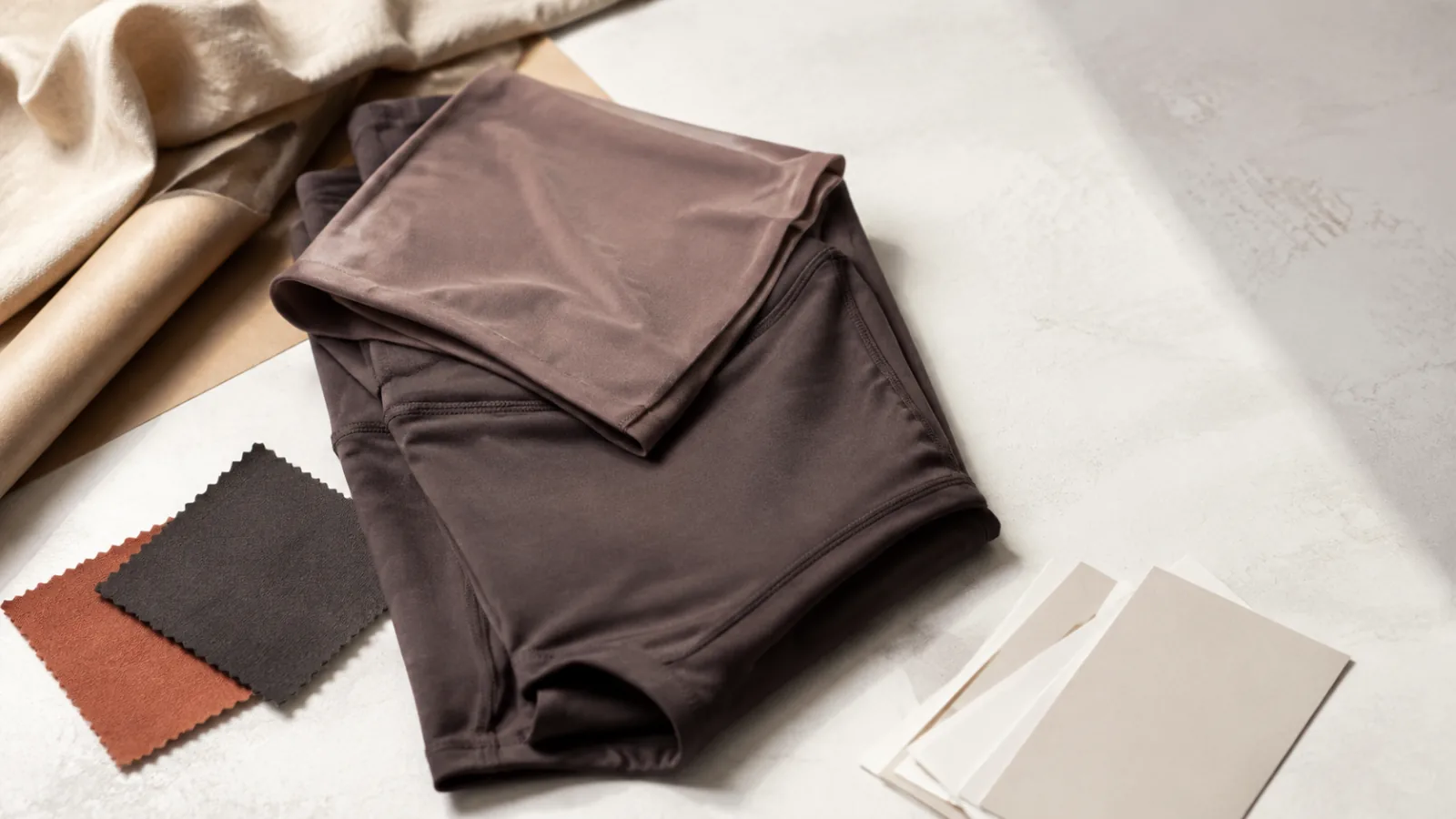
Maternity is requested more often than almost any other extension, which makes it feel like the easy yes. It is an easy question with an expensive answer. The garment is a separate development, and the launch is a multiplication — styles by colourways by sizes — that turns a small addition into a real unit commitment before a single piece sells. Here is that arithmetic out loud, including the version where the right decision is not to.
The short answer
- Maternity is a separate development, not a size extension: its own pattern work, its own fit approvals, its own sampling round — so it consumes a development slot rather than riding along on an existing one.
- Count units before you count sales. Two custom styles at 300–500 pieces each is 600–1,000 units at the floor, and if each colourway carries its own minimum a two-colour launch doubles that again.
- You have no sell-through history for maternity, so the first size buy is a guess — buy fewer sizes deeper rather than a full range thin, and add sizes on the repeat.
- A stock programme starts from 100 pieces per style and tests demand at a fraction of the commitment. If you cannot fund development plus units without slowing the core range, the honest answer is not yet.
A separate development, not a size extension
State the commercial fact once and move on: maternity is its own development. It needs its own pattern work, its own fit approvals and its own sampling round, so it consumes a development slot rather than riding along on one you were already paying for. How the garment is engineered is a separate article. What it costs you to develop is this one.
That matters because a small brand does not have unlimited slots. The constraint is rarely ambition — it is cash, the founder's own attention, and how many fit sessions anyone can realistically run and judge in a season. Maternity takes a whole slot. So the real question is never "can we also do maternity", it is "which core style are we not developing this season". Answer the second one first.
There is a calendar cost inside it too. Fit approval settles more slowly here, because the garment has to be judged against a body that changes rather than in one session on one day. Brief it into your timeline as slower, not equal.
Count the units before you count the sales
Take the smallest maternity launch anyone proposes out loud. One legging. One top. Two colourways each. Five sizes. Nobody would call that a collection — it is the version described in a meeting as "just adding maternity". Now price it in units rather than ambition. The numbers below are illustrative; substitute your own.
Custom development at SEAMDANCE runs 300–500 units per style. Two styles is therefore 600 units at the floor of that band and 1,000 at the top — before colour has been discussed at all. Then ask the question that actually sets the number: can the per-style minimum be split across two colourways, or does each colour carry its own floor? Split, and you stay at 600–1,000. Not split, and two colours across two styles is 1,200–2,000. That answer moves the commitment further than doubling your style count does, and it belongs in your first email to a supplier rather than your third.
Now divide by sizes, because the number that should stop you is not the total. Take the friendly end — 600 units, two styles, two colourways, five sizes. That is twenty SKUs at thirty pieces each. Thirty. That is the depth you are launching a category on. If a size sells out you cannot repeat it without triggering the minimum again; if it does not, thirty pieces across twenty combinations sits in the warehouse. Buying wide at the minimum gives you both bad outcomes at once.
Then the cash, which we are not going to invent for you. Put in your own landed cost per unit. Whatever it is on your core legging, maternity will not come in under it — more fabric, more panels, a slower sew and a smaller run all push the same way. Multiply your number by 600, then by 1,200, and look at both before deciding which one you were actually proposing. Add development on top: patterns, sampling, lab dips per colourway, and whatever testing your markets require on a fabric and colour not yet tested. All of it is spent before the first unit ships.
Every one of those multipliers is a merchandising decision taken months before anyone speaks to a supplier. Colour is the cheapest to cut and the one brands defend hardest, which is exactly backwards on a first buy into an unproven category.
The size ratio is a guess. Buy like it is one.
You normally buy a size ratio against sell-through history. For maternity you have none — not because you are inexperienced, but because your existing range does not contain that data. Your core legging's curve describes what your customer bought before she was pregnant, which is related to what she buys now but is not the same thing. Anyone handing you a confident maternity ratio without asking about your customer base is guessing with your budget.
What drives the ratio is worth naming, because you can reason about these without numbers. Who your existing customers are, and whether they are at this life stage at all. Your price point, since a higher price narrows the buyer and shifts the mix. Whether you are selling one trimester or three, because a piece for early pregnancy and one for the final weeks are bought by the same person at different sizes and different moments. And where you sell: a marketplace audience is not your email list and will not size like it.
So start narrow. Fewer sizes bought deeper beats a full range bought thin, for one reason that outweighs the rest — a size that sells out is a signal you can act on, whereas twenty SKUs at thirty pieces tells you nothing except that you spread yourself. Sizes you skip can be added on the repeat once a curve exists. Sizes you bought and did not sell are cash you do not get back.
The inventory clock
This is what makes maternity different from adding another colourway to a proven legging, and it is the part most brands never price. Your maternity customer's need is time-boxed: it runs a few months and then it ends. She will not repeat-buy the same piece the way a core customer replaces a legging she wears three times a week for two years.
So demand for any individual unit is a stream of new customers rather than a returning one. That is fine while the stream runs. It is not fine for unsold stock, because unsold maternity ages differently. A core legging that undersells can go into a bundle, a sale, a second season or a colour refresh, and it faces your whole customer base every time. Unsold maternity faces only the slice that is pregnant right now — largely the slice you already sold to.
So decide the exit before you buy the units: what happens to whatever does not sell in the first two quarters. Discount it, bundle it, hold it for the next cohort, or write it down at a date you set now. Any of those is legitimate; having no answer is how a category addition quietly becomes a warehouse line you carry for two years. It cuts both ways, in fairness — a time-boxed need is an urgent one, and urgency is good for full-price sell-through. That helps the units that sell. It does nothing for the ones that do not.
Where it genuinely makes sense
There are real cases, and dismissing the category would be as lazy as rushing into it. The first is unprompted demand: customers asking, repeatedly, without you having raised it. That is the strongest signal available and it costs nothing to measure — count the actual requests from the last six months before you brief anything. A competitor having maternity is not the same signal; competitors also have inventory problems you cannot see.
The second is a strong direct relationship. A brand with a list or a community that buys from it directly can take pre-orders, and pre-selling converts the guess into an order. It is the most effective way to de-risk this particular category, because it does two jobs at once: it funds part of the buy, and it produces a size ratio from people who actually paid rather than from an assumption.
The third is scope discipline. If the request you are hearing is "can I still wear your leggings", the honest answer may be one adapted style rather than a maternity line. One style at 300–500 units is a category test. Two styles in two colourways is a category commitment. Brands routinely make the second while believing they made the first.
The fourth is the stock route. Stock styles start from 100 pieces — a materially different commitment from custom development — and stock samples come back in three to four days. You give up the pattern being exclusively yours and the fabric being your specification, and the product will not be distinctive. What you get is a real answer at roughly a third of the units and without spending a development slot. If the purpose is to learn whether your customers buy maternity from you at all, a stock programme answers that at a price custom development cannot match. Prove demand there, then develop your own version against a curve you earned rather than invented.
When the answer is don't
If you cannot fund the development slot and the units without slowing the core range, adding maternity does not grow the brand. It borrows from it — specifically, from the part of the business that works, to fund a part that is unproven. That is a trade, not an expansion, and calling it growth does not change the cash position at the end of the quarter.
There is a simple test. Write down the two things you would develop this season if maternity did not exist. Then check whether the maternity launch pushes either out, and whether the money for the units comes from a reorder you had planned on your best seller. If both are true, you are swapping a known return for an unknown one. Sometimes that is the right move — but only if made deliberately, with both sides of the swap written where you can see them.
And treat "not yet" as a real answer rather than a failure of nerve. The request does not expire. The customers asking today will still be asking next year, by which point you may have the cash for proper depth, a list large enough to pre-sell into, or a core range strong enough that one slot is not the whole season. Running this arithmetic and choosing to wait is cheap. Running it after the goods land is not.
Five things to decide before you brief anyone
These are questions to answer before a supplier conversation, not during it. A supplier can price whatever you describe; it cannot tell you what to describe. One: how many styles, and which single style you would run if allowed only one. Two: how many colourways, and whether you would still do this in one colour. Three: which sizes, and separately which sizes you are deliberately not making in the first buy. Four: what happens to unsold units, written down before those units exist. Five: whether this is a test of demand or a commitment to a category — those produce different briefs and different numbers.
Bring those five answers and a quotation becomes arithmetic you can act on. Bring "we're thinking about maternity" and you get a number describing a supplier's assumptions rather than your plan. The general work of qualifying any new category — construction, minimum structure, compliance, calendar, demand — is covered in our new-category checklist and worth running alongside these five.
Where SEAMDANCE fits starts with the category. We have our own factory, and our one-stop service covers the rest of a range. For a maternity design, the pattern, construction and appropriate production route need review before sampling. We quote inside 24 hours, so the arithmetic above is a real number rather than an assumption. A custom first sample takes about seven days, so demand can be photographed, shown to your list and pre-sold before you commit to full production. Final inspection runs to AQL 2.5, the same standard as the rest of your range.
What we cannot do is the more important half. We cannot tell you whether your customers want this — that answer lives in your inbox and your order history, not ours. We hold no sell-through data for anyone else's business. The decision is yours. The part we can make cheap and fast is finding out exactly what it would cost.
Quick answers
How can I tell if my customers really want maternity activewear?
Look for unprompted demand: customers asking for maternity, repeatedly, without you having raised it. It is the strongest signal available and costs nothing to measure, so count the actual requests from the last six months before you brief anything. A competitor having maternity is not the same signal; competitors also have inventory problems you cannot see.
Should I take pre-orders before committing to a maternity line?
Yes, if you have a list or community that buys from you directly. Pre-selling is the most effective way to de-risk this particular category because it does two jobs at once: it funds part of the buy, and it produces a size ratio from people who actually paid rather than from an assumption. Photograph a first sample, show it to your list and pre-sell before committing to full production.
What should I do with maternity stock that does not sell?
Decide before you buy what happens to whatever has not sold in the first two quarters: discount it, bundle it, hold it for the next cohort, or write it down at a date you set now. Any of those is legitimate; having no answer is how a category addition becomes a warehouse line you carry for two years. Unsold maternity faces only the slice of your customers who are pregnant right now, largely the slice you already sold to.
Sourcing styles for your line? The 2026 catalogue lists every ready-to-develop style — colorways, materials, quote list built in.