Suppliers offer trend advice freely, and most of it is worth exactly what it costs. Repeating a published forecast adds nothing you could not buy yourself. What a production supply chain can genuinely see is narrower and more useful: which colours are actually being dyed, which fabrics are being developed, and which of those will hold up at your order size. That is a feasibility signal, not a fashion one — and it is worth knowing the difference before you build a range on it.
The short answer
- Supplier trend input is only valuable when it is first-hand: what the supply chain is actually dyeing, knitting and developing — not a repeated forecast.
- A seasonal colour card from a supplier answers a production question: which shades can be achieved consistently, at what minimum, with acceptable fastness.
- Supply-chain signals lag consumer trends and are biased toward the brands that supplier serves — they do not replace knowing your own customer.
- Use supplier colour input as a feasibility filter after you set direction, not as the source of the direction.
Two kinds of trend input, only one of them useful
The first kind is second-hand: a supplier relaying a published seasonal forecast. It is easy to produce and adds no information — you can subscribe to the same source, and so can every competitor being told the same thing.
The second is first-hand and comes from the production floor: which colours are moving through the dye house in volume this quarter, which fabric constructions mills are developing, which finishes are being requested repeatedly. A supplier sees this months before it appears at retail, because it happens upstream of retail.
That second signal is genuinely privileged information, but it is important to describe what it is. It tells you what the industry is preparing to sell. It does not tell you what your customer wants — those are different questions, and only one of them is answerable from a factory.
What a seasonal colour card is for
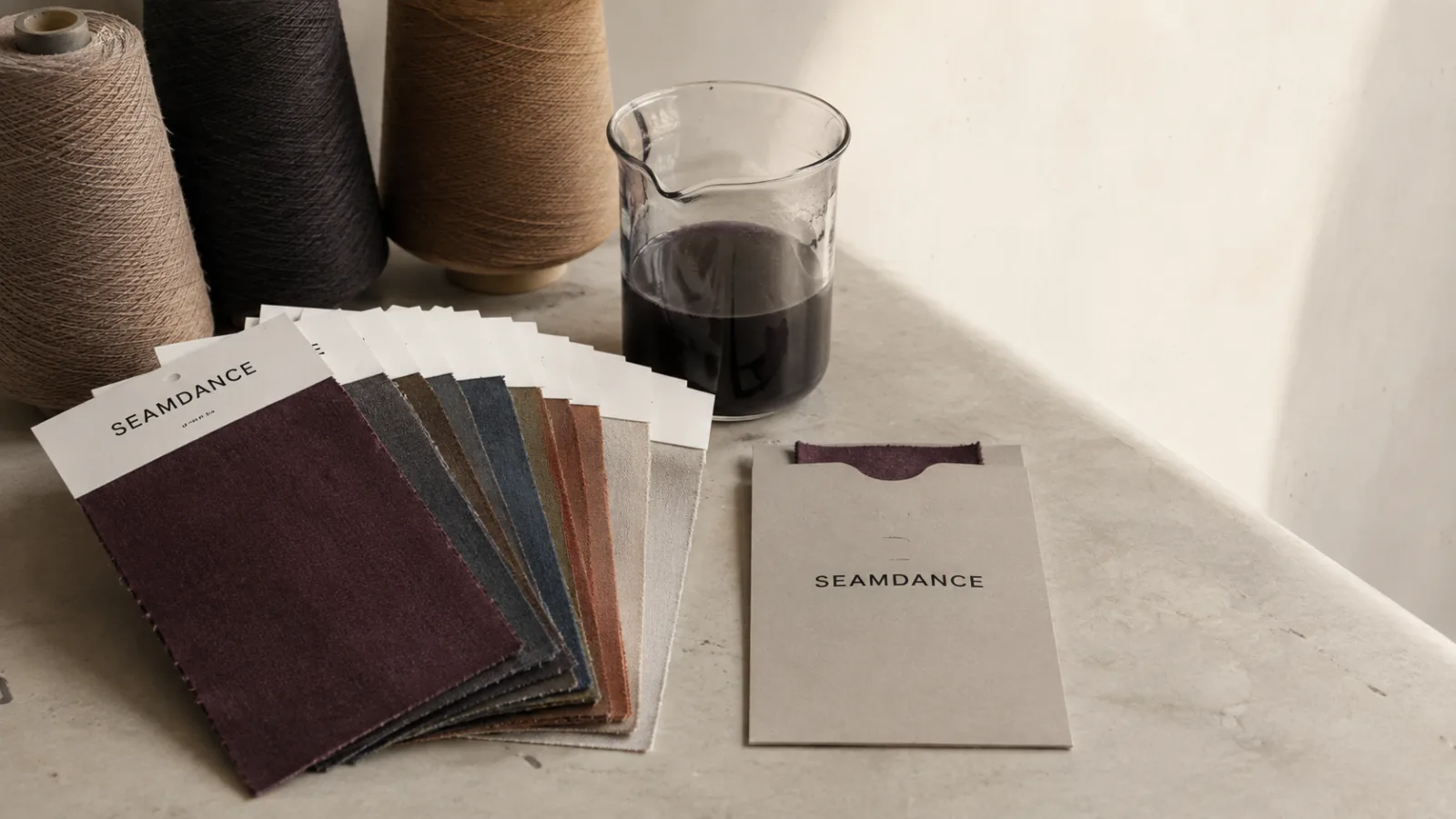
We issue seasonal colour cards to buyers each quarter. The purpose is not to declare which shades are fashionable. It is to show which colours our supply chain can achieve reliably in the coming season — with a stated reference, a realistic minimum and predictable fastness behaviour on activewear fabric.
That distinction matters because colour is where nice-looking ranges become expensive. A shade can be beautiful on screen, achievable only above a dye minimum three times your order, prone to crocking on a stretch fabric, or nearly impossible to match on a reorder six months later. None of that is visible in a trend forecast.
Read a supplier's colour card as a menu of production-safe options, and treat anything outside it as a request that needs a feasibility answer before it enters a line plan.
The colour constraints nobody mentions until sampling
Minimum dye quantity is the constraint that most often reshapes a range. Colour minimums, not style minimums, usually set the real floor for a small order — which is why four colours at the minimum frequently costs more and sells worse than two colours in a meaningful depth.
Fastness varies by shade, not just by fabric. Deep and saturated colours carry higher risk of crocking and dye migration, which matters on garments worn against skin and under load. A logo printed on a saturated ground can shift colour over time if the combination was never tested.
Repeatability is the constraint that hits later. Some shades match easily across dye lots; others drift, and a customer comparing a reorder against last season's piece will see it. If a colour is intended to become a permanent line, it should be chosen partly on how reliably it repeats — a question only the dye house can answer.
Where supplier input stops
A supply chain cannot tell you who your customer is, what your brand should stand for, or which of your competitors is about to discount. Those decisions require information no factory has, and a supplier who offers confident opinions on them is usually guessing with more assurance than evidence.
The signal also has structural bias. What we see is what the brands we serve are ordering — a real sample, but a partial one, weighted toward certain markets and price points. And it lags: by the time a colour is moving in volume through dye houses, the decision to use it was made months earlier by someone else.
So the honest framing is: we can tell you what is being made and what will hold up in production. You tell us what you are trying to sell and to whom. A partner who blurs that line into 'we know what will sell' is overselling — and the cost of believing it lands in your inventory, not theirs.
How to use it in a line plan
Set your direction first from your own customer data, then run it against the supply-chain filter. Bring proposed shades to the supplier and ask four questions: can this be achieved on this fabric, at what minimum, with what fastness result, and how reliably will it repeat on a second run.
Then split your palette deliberately. Core colours should be the ones that repeat cleanly and carry the range across seasons; seasonal colours can take more risk because they are not expected to match a year later. Mixing those two roles is how brands end up with a bestseller they cannot reproduce.
Finally, ask what the supplier is seeing rather than what they think will be popular. 'What are you dyeing most of this quarter' is answerable and factual. 'What will be big next year' invites an opinion you should discount to roughly zero.
Quick answers
Should I pay for a trend forecast if my supplier gives colour advice free?
They answer different questions. A forecast covers consumer direction; a supplier colour card covers production feasibility. If budget allows one, choose based on your weaker side — most young brands have more instinct about their customer than about dye minimums and fastness.
How many colours should a first range have?
Usually fewer than planned. Colour minimums normally bind before style minimums, so depth in two well-chosen colours generally outperforms four colours ordered at the floor. Add colours once a silhouette has proven it sells.
Sourcing styles for your line? The 2026 catalogue lists every ready-to-develop style — colorways, materials, quote list built in.