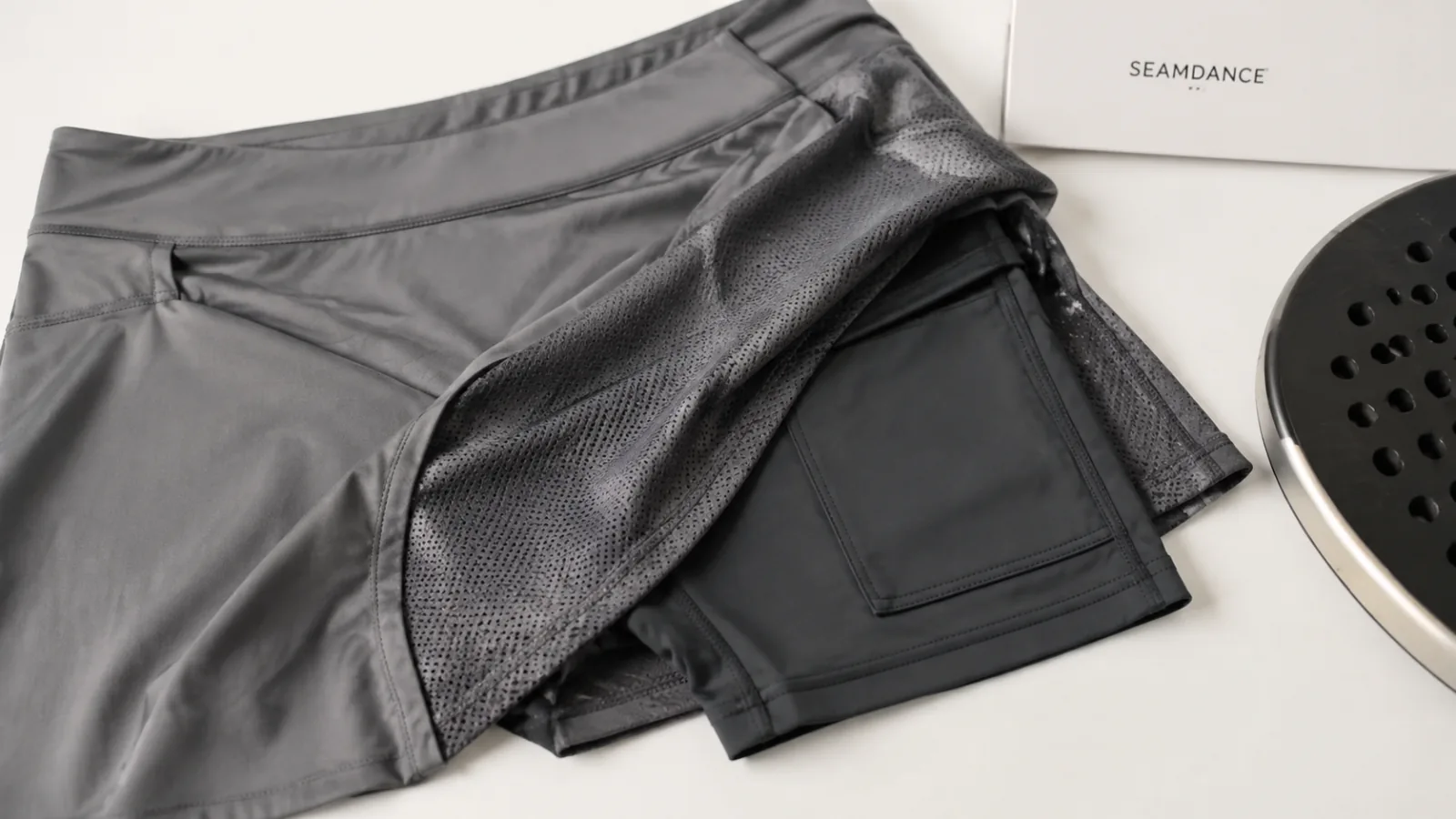
Padel has pulled a large, spending audience into racket sport, and activewear brands are adding it fast. Most of what ships as padel apparel is tennis product with a different label. That works until a real padel player wears it, because the sport moves differently — and the differences are specific enough to brief, if you know them before development rather than after the first review.
The short answer
- Padel apparel overlaps tennis but is not identical — the movement is more lateral, enclosed and repetitive, which changes fit and fabric priorities.
- Womenswear centres on skorts and dresses with secure ball-storage; menswear on shorts with real pockets and breathable tops.
- Priorities are grip and stay-put fit, moisture management in an enclosed court, and freedom for low, reactive movements.
- Route it as its own development, not a relabelled tennis style — the differences show up exactly where a player notices.
Why padel is not just tennis
Padel is played on an enclosed court, in doubles, with a lot of short, reactive, lateral movement and low returns off the back glass. The result is more repeated bending, twisting and lateral push than a tennis brief assumes, and less long-line sprinting. Apparel built for one plays wrong in the other in ways a player feels immediately.
The enclosed court also changes the climate. Less airflow than an open tennis court means heat and moisture build up faster, which pushes breathability and moisture management up the priority list relative to tennis.
None of this makes padel exotic to produce. It makes it a distinct brief. Treating it as tennis with a padel label produces garments that look right in a photo and fail on the second point of a real game.
The women's range
Skorts and dresses lead, and the defining feature is the built-in short: secure, non-riding, and increasingly expected to hold a ball. Ball storage — a grip pocket on the short or a discreet leg pocket that actually retains a ball through movement — is a small detail that separates real padel product from a repurposed tennis skirt.
Coverage and opacity under low, reactive movement matter more than in tennis, because padel involves more bending to low balls. The same squat-test discipline used for leggings applies here: check the skort short for opacity and the waistband for migration through the movements the sport actually involves.
Fit has to stay put during quick direction changes. A skort that rides or a strap that slips is not a cosmetic complaint in a sport played at this pace; it is why a customer does not reorder.
The men's range
Men's padel centres on shorts and breathable tops. The shorts need real pockets — deep enough to hold a ball securely during play, not decorative — and a length and cut that allow a full low lunge without riding up. This is the detail most often wrong on shorts adapted from general training ranges.
Tops prioritise moisture movement and freedom across the shoulders for the overhead and lateral actions the sport repeats. Seam placement matters where a strap or a repeated swing would otherwise cause rub.
As with the women's range, the construction is familiar activewear; the specification is padel-specific. The pocket that holds a ball, the short that survives a lunge, the top that clears the shoulder — these are briefable requirements, and they are where the category earns its own line rather than borrowing tennis's.
Adding it without adding a supply chain
The construction sits close to existing cut-and-sew activewear and tennis programs, so for many brands padel is a genuinely efficient extension — the same factory type, often the same factory. That is the good case: a new category routed to a specialist you already understand, folded into the same approval path, inspection standard and shipment.
The failure case is the relabelled skort — tennis product sold as padel with no specification change — which reads as inauthentic to the audience most likely to become repeat customers. The category's whole appeal is that its players take it seriously.
Brief it as its own development with the padel-specific requirements written in, validate demand from customers already asking, and size the first run to test rather than to fill a catalogue. Handled that way, padel is one of the cleaner category extensions available to an activewear brand right now.
Quick answers
Can my tennis apparel factory make padel wear?
Usually yes — the construction is close, and often it is the same cut-and-sew factory. What changes is the specification: ball-storage pockets, fit that survives low lateral movement, and breathability for an enclosed court. Route it as its own brief to that factory rather than reprinting a tennis style.
Is padel apparel different enough from tennis to justify a separate range?
To the padel audience, yes. The movement is more lateral and enclosed, and details like secure ball storage and lunge-proof shorts are noticed immediately. A relabelled tennis range sells once; a properly briefed padel range earns reorders from players who take the sport seriously.
Sourcing styles for your line? The 2026 catalogue lists every ready-to-develop style — colorways, materials, quote list built in.