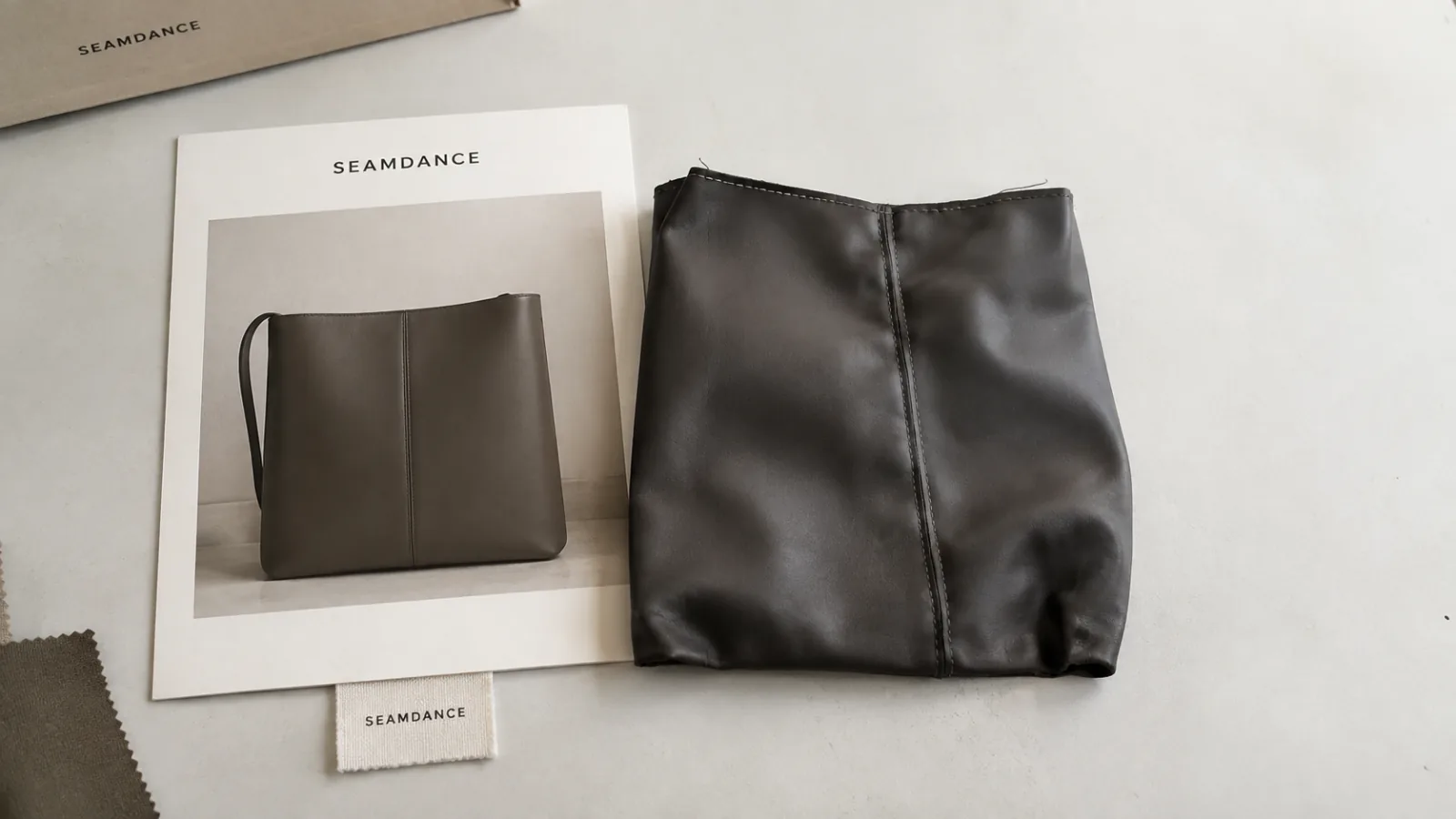
The parcel arrives, you open it, and the disappointment is immediate: the stitching wanders, the hems are bulky, the fabric has none of the hand you were promised, and none of it looks like the photographs that made you choose this supplier. Several hundred dollars, gone, with nothing to show for it. The instinct at that point is to conclude the supplier lied and start again somewhere else. Sometimes that is right. More often the sample is the first honest thing in the entire exchange, and reading it properly is worth more than the money it cost.
The short answer
- Listing photographs are rarely the seller's own work at your specification. They may be stock imagery, a garment made for a different client at a different price, or a product photographed from elsewhere. There is usually no way to tell from outside.
- A paid sample is the first point in the process where you see something the supplier actually made for you. That makes it research spending, not a nuisance fee — and the disappointing sample has still bought you real information.
- Poor stitching and finishing usually have a mechanical cause: the wrong machine for the seam, a sample room rather than a production line, or an operator grade that will not appear in bulk either way.
- Sampling one style from two or three suppliers you have already screened beats sampling from ten. Sample budget is finite; the screening that happens before it is what makes it go further.
What those photographs actually were
Listing photography is the least verifiable thing on a supplier page and the thing buyers weight most heavily. Some of it is licensed stock. Some of it is a garment the company genuinely produced, but for another client, to their specification, at their price and their fabric budget. Some of it is a competitor's product photographed off a marketplace. All three look identical to you, and only the second is even arguably a claim about capability.
Even the honest version misleads. A facility that made a beautiful piece for an established brand made it to a specification that brand developed over several rounds, on a fabric that brand qualified, at a price that supported the construction. Handing the same facility a first tech pack and a small order does not reproduce that garment. The photograph was true and still told you nothing about what you would receive.
The sample is the first honest data point
Everything before the sample is a claim: the listing, the certifications named in an email, the assurances about quality. The sample is the first artefact that exists because of you, made to your specification, by the people who would make your order. That is why sample fees are worth paying and why free-sample offers deserve more suspicion than gratitude — a free sample is usually a stock garment from a shelf, which tells you what they already had, not what they can make.
So a bad sample is not wasted money. It answered the question. What it cost you was the chance to ask a cheaper version of the question first, which is a screening problem rather than a sampling problem. The expensive mistake is not the sample that came back wrong; it is having no way to narrow the field before paying for several of them.
Reading a bad sample mechanically instead of emotionally
Wandering stitching, puckered seams and bulky hems are not usually carelessness. They are the visible result of a specific mismatch, and naming it tells you whether the problem is fixable with this supplier or fundamental. A seam that should have been flatlocked and was sewn on a conventional machine will always sit proud, because the machine cannot produce a flat join. Hems that ripple on stretch fabric usually mean the wrong stitch was used, not that the operator was sloppy.
Fabric disappointment splits the same way. A hand feel that is harsher than promised is a yarn and finishing question, and it is answerable: ask for the actual composition and weight that was used, not the one on the tech pack. Fabric that goes see-through under stretch is a knit density and colour question. Recovery that fails after one wear is elastane grade. Each of these has a real answer, and a supplier who can give it is a different proposition from one who apologises and offers a discount.
The test is what happens when you name the mechanism. Ask why the seam sits proud and a capable supplier will tell you which machine ran it and whether they have the right one. A supplier who responds only with reassurance has told you they do not control the line, and no amount of further sampling will change that.
The sample room is not the production line
There is a failure mode that runs in the opposite direction and costs far more: the beautiful sample that bulk does not resemble. Samples are often made in a dedicated sample room by the most experienced operators, one piece at a time, with unlimited attention. Bulk runs on a line, at speed, by whoever is on shift. A sample that is better than the factory's normal output is not a lie, but it is not a promise either.
This is the entire reason the sealed sample exists. Once a sample is approved, both sides physically tag and sign it as the binding reference, and inspection judges bulk against that object rather than against anyone's memory of a conversation. Without a sealed sample there is nothing to hold the order to. With one, disagreements become measurable.
Spending the next sample budget better
The change that matters is doing the screening before the money moves, not after. Narrow to two or three suppliers where you have confirmed the construction actually runs on their own lines, rather than sampling from everyone who replied. Sample the same style from all of them so the comparison is real; different styles from different suppliers compares nothing.
Specify the sample the way you would specify bulk, including the things people leave out — the exact fabric composition and weight, the seam types, the size to be made, and the labelling. Then ask one question explicitly before they start: what will you substitute if something on this list is unavailable, and will you tell me before or after you make it. The answer is often the most useful thing in the whole exchange, and it costs nothing.
Finally, decide in advance what would make you reject the sample. Writing that down before it arrives is what stops the two familiar mistakes: accepting something mediocre because you have already spent the money, and rejecting something fixable because the first look was disappointing.
Where SEAMDANCE fits, and what a good sample still cannot promise
SEAMDANCE is a gym wear, activewear, yoga wear and sportswear manufacturer in Xiamen, China. With our own factory and a one-stop service, we take a whole range from development to delivery — leggings, sports bras, tops, shorts, sets, seamless styles, jackets and hoodies, swimwear, tennis wear, bags, yoga mats and accessories. One order, one quality standard, one team accountable for all of it. Certificates are provided for the order by the factory or mill that holds them; we verify the holder, scope and validity before the order is placed. No certification is claimed for SEAMDANCE or its own factory. On sampling, the published parameters are simple enough to check us against: stock samples in 3–4 days, custom first samples in about 7, and final inspection to AQL 2.5 before shipment.
What no arrangement removes is the underlying limit of a sample. One good garment proves the construction is achievable and that someone in the building can do it. It does not prove the line will reproduce it in a thousand pieces, which is why the sealed sample and an agreed inspection standard exist and why we would rather argue about them before an order than after. If a supplier — us included — will not put the inspection standard in writing before production, that is the signal to take seriously, not the sample photograph.
What a disappointing sample is actually telling you
| What you see | Usual mechanism | What to ask |
|---|---|---|
| Seam sits proud, bulky inside | Conventional machine used where flatlock was specified | Which machine ran this seam, and do you have flatlock in-house? |
| Hem ripples or cracks on stretch | Wrong stitch type for a stretch fabric | Was this coverstitched? Can you show the hem on a stretched panel? |
| Fabric harsher than promised | Different yarn or finishing than specified | What composition and weight did you actually run, versus the tech pack? |
| See-through when stretched | Knit density and colour depth, not fibre content | What is the finished GSM, and can you sample this in the darkest and lightest shade? |
| Bags out after one wear | Elastane grade or knit recovery | Can you give stretch and recovery figures after wash cycles, not new? |
| Colour is not the reference | Approved from a screen or a paper swatch, not a lab dip | Can we run a lab dip against a textile colour reference before bulk? |
| Beautiful sample, ordinary factory | Sample room, not the production line | Will this be sealed as the standard, and inspected against it at what AQL? |
Quick answers
Should I ask for free samples?
A free sample is usually a stock garment pulled from a shelf, which tells you what the supplier already had rather than what they can make for you. Paying for a sample made to your specification buys information; a free one mostly buys a photograph you could have found online.
The sample was wrong — should I give the supplier a second try?
It depends entirely on their explanation. A supplier who names the mechanism — the machine, the yarn, the stitch — and says what changes is worth one more round. A supplier who apologises, offers a discount and explains nothing has shown they do not control the line, and a second sample will not change that.
How do I stop bulk from being worse than the sample?
Seal the approved sample as the binding reference, with both sides holding an identical tagged copy, and agree the inspection standard in writing before production starts. Without those two things there is nothing to hold the order to, and disagreements become opinion rather than measurement.
Sourcing styles for your line? The 2026 catalogue lists every ready-to-develop style — colorways, materials, quote list built in.