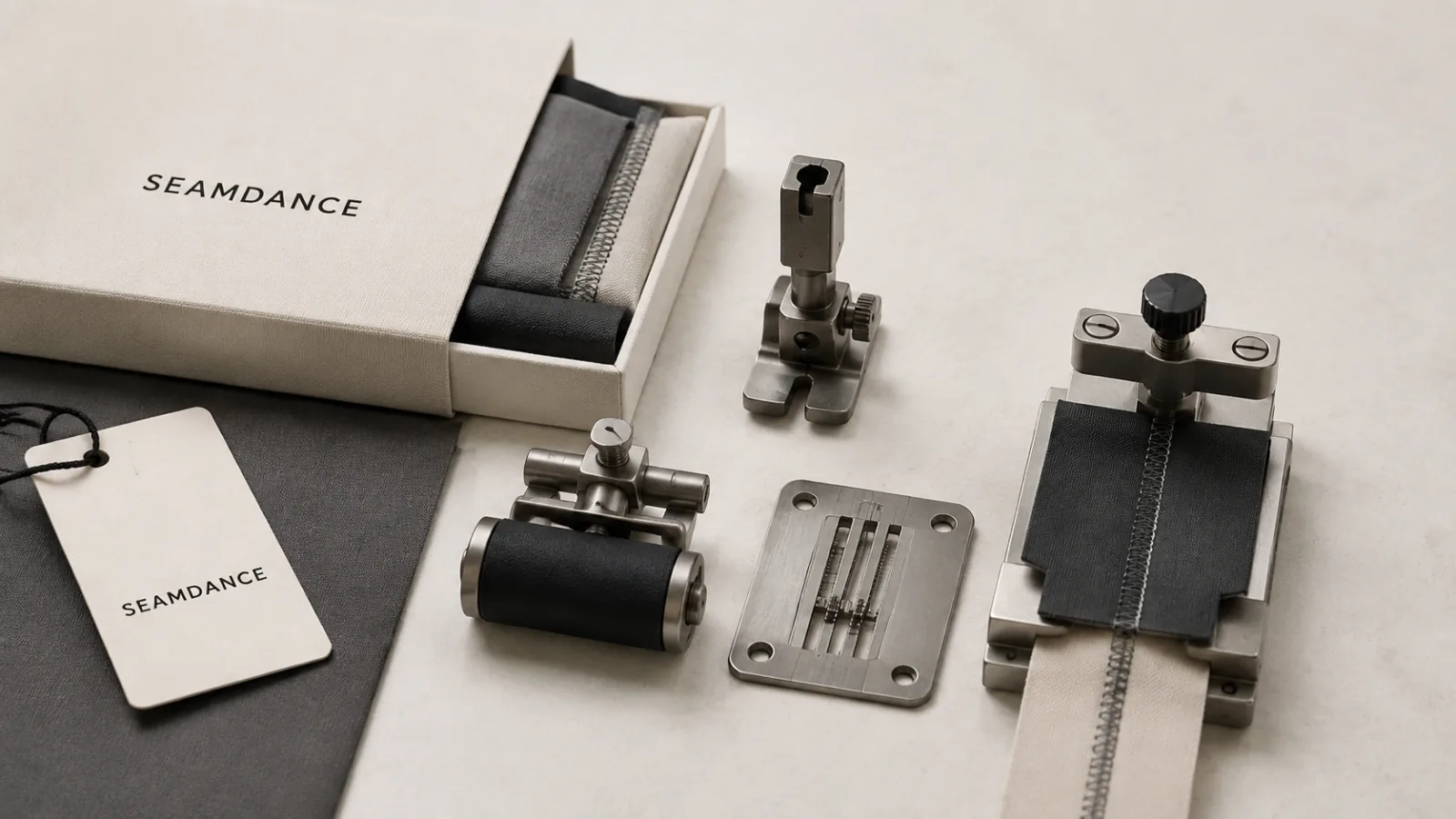
A brand with a working apparel supplier asks the obvious question: you already make our tees and hoodies well, can you add leggings and bras? The answer that comes back is almost always yes. It is usually sincere, and it is usually wrong — not because anyone is lying, but because the gap between woven-and-jersey apparel and technical activewear sits in equipment and testing rather than in skill. A good tee factory has excellent sewers and no way to make a legging that survives a squat. This guide names the four things that are missing and what each one costs you when it is missing.
The short answer
- General apparel factories and activewear factories differ in equipment and test regime, not in competence — a great tee maker can be genuinely unable to make a good legging.
- The four gaps: four-way stretch fabric sourcing and handling, seamless circular knitting machines, flatlock and coverstitch seam machines set up for stretch, and elastic tensioning control.
- The fifth gap is testing: opacity under stretch, recovery after wear cycles, colourfastness to sweat and chlorine — none of which a tee ever needed.
- Symptoms of the wrong factory: see-through leggings, waistbands that roll, seams that chafe, bras whose support dies after ten washes.
- Adding activewear usually means adding a supplier, not extending one — which is why coordination across facilities becomes the real problem to solve.
Gap one: the fabric behaves like a different material
A jersey tee fabric stretches in one useful direction and forgives almost everything. Performance activewear fabric stretches in two axes and is expected to return to shape after each one — that is the whole point of four-way stretch, and it changes every step downstream. It is cut differently because it grows under its own weight on the spreading table. It is sewn differently because feeding it at the wrong tension bakes in a distortion no pressing will remove.
A factory that has not handled it will quote as if it were jersey, and the price will look good. The cost arrives later as a fit that drifts between sizes, because the pattern was graded without accounting for how much the fabric gives at each measurement point.
There is also a sourcing problem hiding inside the making problem. Performance knits come from a different set of mills than jersey, with different minimums and lead times. A supplier without those mill relationships is not just missing a machine; they are missing a phone book.
Gap two: seamless is a machine you either have or do not
Seamless activewear is knitted in the round on a specific class of circular machine, producing a tube with support zones knitted into it rather than sewn on. There is no way to approximate that on a sewing floor. A factory either has the machines, the programmers who write for them and the finishing to match, or it makes a cut-and-sew garment and calls it seamless.
This matters commercially because seamless is where a growing share of activewear demand sits — bras and leggings with no side seam, marketed on comfort. If your range includes it, the question is not whether your current supplier can make it but whether they own the machines, and that question has a number for an answer: how many cylinders, at what gauge.
The honest counterpoint: seamless is not automatically better. Cut-and-sew gives you sharper shaping, easier fabric variety and lower development cost, and plenty of excellent activewear is cut-and-sew by choice. The failure is not choosing one route; it is being told you are getting one and receiving the other.
Gap three: the seams need machines a tee factory has no reason to own
Activewear seams are built flat so they do not sit against skin as a ridge. That construction comes from a class of machine set up for the job, not from a careful operator on a standard lockstitch. Hems and waistbands need coverstitch that holds stretch, or the first deep squat pops the thread.
This is the gap that produces the most returns, because the garment looks correct in a photograph and fails in use. A chafing seam or a burst hem is not a cosmetic defect; it is the garment not doing the job it was sold for.
It is also the easiest gap to test before you commit. Ask which machines run the seams and how many are on the line. A factory that owns the equipment answers in specifics, including where the line bottlenecks. A factory that does not will answer about quality and comfort.
Gap four: elastic is a setting, not a material
Waistbands and bra bands fit the way they do because elastic is applied under a controlled tension. Same elastic, same pattern, different tension, different garment. On a floor that does not measure it, the setting drifts between operators and between days, and your reorder fits differently from your first order.
The control is unglamorous: a specification on the work order, a measured stretch length rather than an operator's feel, a first-piece check at the start of each batch. Factories that make activewear regularly have it because they have been burned. Factories that do not, do not know they need it.
This is the single most common reason a brand loves the sample and hates the bulk. The sample was made slowly by the best operator in the building. Bulk was made at speed by whoever was free.
The fifth gap: tests your tees never had to pass
Opacity under stretch is the one that ends up on social media. A legging that is opaque flat can be sheer at 30% extension, and the only way to know before shipping is to test it stretched, on a mannequin or a frame, in the colour and fabric you are actually running. Light and heather colours fail most often.
Then there is recovery — does the fabric return after repeated wear cycles, or bag at the knee by week three — and colourfastness to sweat and chlorine, which a cotton tee never had to survive. Each of these is a defined test, and a factory that runs activewear routinely will already know which ones your market asks for.
None of this is exotic and none of it is expensive relative to a failed launch. It is simply a regime that does not exist in general apparel, so a supplier extending into activewear will not have it unless someone asks.
So what should a brand actually do
If activewear is one or two styles in a broad clothing range, the pragmatic answer is often to keep your apparel supplier for the apparel and place the activewear with a specialist. That means one more supplier, one more sampling calendar and one more shipment to reconcile — which is a real cost, just a smaller one than a legging that goes sheer.
If activewear is becoming a meaningful share of the range, the problem changes shape. Seamless, cut-and-sew, outerwear and accessories are genuinely different plants, and you end up coordinating four relationships to ship one collection. At that point the question stops being which factory and starts being who holds the standard across all of them.
SEAMDANCE is a gym wear, activewear, yoga wear and sportswear manufacturer in Xiamen, China. With our own factory and a one-stop service, we take a whole range from development to delivery — leggings, sports bras, tops, shorts, sets, seamless styles, jackets and hoodies, swimwear, tennis wear, bags, yoga mats and accessories. One order, one quality standard, one team accountable for all of it. A brand can start with what our own factory makes and add other categories through our one-stop service, under the same approval, inspection and shipment plan. Check the machinery and sample evidence for each construction rather than assuming that one floor makes every product.
What separates a general apparel factory from an activewear factory
| Capability | General apparel factory | What goes wrong without it |
|---|---|---|
| Four-way stretch handling | Cuts and grades it like jersey | Fit drifts between sizes; distortion baked in at sewing |
| Seamless circular knitting | Does not own the machines | Cut-and-sew delivered as seamless, or the style is quietly dropped |
| Flatlock and stretch coverstitch | Standard lockstitch and overlock | Seams that chafe; hems that burst on a deep squat |
| Elastic tension control | Applied by operator feel | Reorder fits differently from the first order |
| Stretch opacity, recovery, sweat and chlorine tests | Never needed them for jersey | See-through leggings; bagging at the knee; colour bleeding |
Quick answers
My tee supplier says they can make leggings. Are they lying?
Usually not — they mean they can sew them, and they probably can. The question is whether they own four-way stretch experience, the seam machines, elastic tension control and the stretch test regime. Ask which machines run the seams and how tension is recorded. A factory with the capability answers in specifics; one without answers about quality and comfort.
Can one factory make my whole activewear range?
Rarely a full one. Seamless and cut-and-sew are different machines in different plants, and outerwear and accessories are different again. A single factory can cover a narrow range well. A range that crosses those routes means several facilities, which is a coordination problem rather than a manufacturing one.
Is seamless better than cut-and-sew?
No, they are different tools. Seamless removes side seams and knits support zones in, which suits comfort-led bras and leggings. Cut-and-sew gives sharper shaping, wider fabric choice and lower development cost. The problem is never choosing one; it is being sold one and shipped the other.
What is the cheapest test to run before I commit?
Stretch the sample to about 30% on a frame or mannequin, in the actual production colour, and photograph it under bright light. Opacity failures are the most common and most public activewear defect, and light and heather colours fail most often. It costs nothing and it catches the fault that ends up on social media.
Why seamless, cut-and-sew and outerwear sit in different facilities — and who holds the standard across them.
Open the programSourcing styles for your line? The 2026 catalogue lists every ready-to-develop style — colorways, materials, quote list built in.