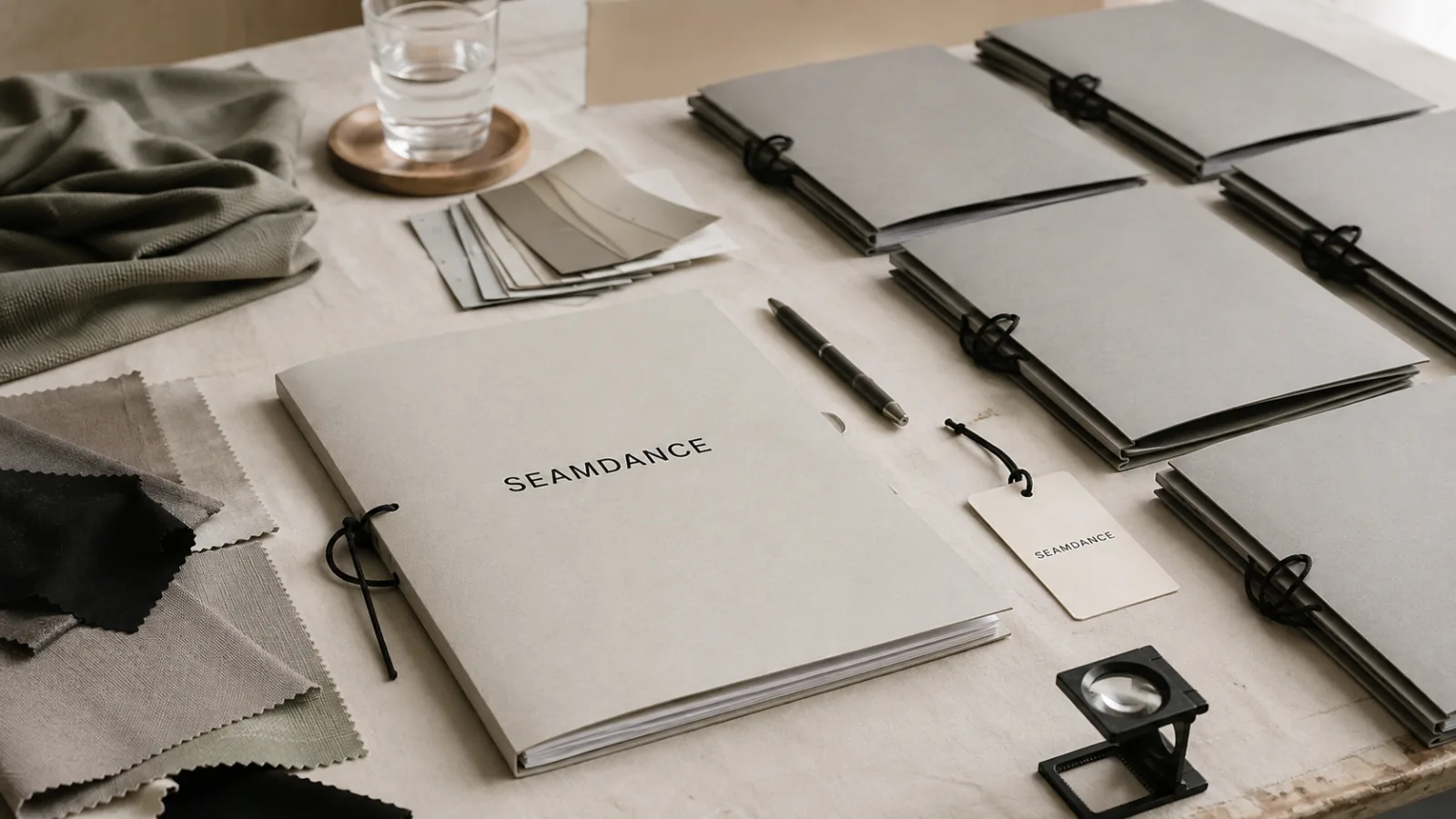
There is no honest way to rank activewear factories from the outside. Nobody who has not run production at ten of them knows which is best, and the parties who do know are the ones with a reason to lie. What can be done honestly is narrower and more useful: read what each company publishes about itself, check whether the certificates belong to them or to somebody else, note where their own pages contradict each other, and set it out side by side. That is what this is. There is no number one.
The short answer
- SEAMDANCE publishes this page and competes for the same budgets as the companies listed here. SEAMDANCE is a gym wear, activewear, yoga wear and sportswear manufacturer in Xiamen, China. With our own factory and a one-stop service, we take a whole range from development to delivery — leggings, sports bras, tops, shorts, sets, seamless styles, jackets and hoodies, swimwear, tennis wear, bags, yoga mats and accessories. One order, one quality standard, one team accountable for all of it. SEAMDANCE is listed as the publisher, in the first row, held to the same standard as everyone else: only what its own pages state. Its partner factories are not listed. This is our own marketing content, not an independent third-party review. No company paid to be listed.
- This guide names no winner and includes no ranking position. SEAMDANCE publishes the page; its own row comes first, labelled as the publisher, and is not a ranking position.
- Verified MOQs across the set run from 100 pieces per style up to 3,000 pieces per design — the single widest variable between suppliers.
- The most common disclosure error is certification attribution: certificates held by partner fabric mills presented as the garment factory's own, sometimes after expiry.
- Useful signals: certificate numbers with issuing body and expiry, a published factory address rather than an office, and a single MOQ that stays the same across pages.
Who publishes rankings like this one
Search for the best activewear manufacturers in China and a large share of what comes back is published by manufacturers themselves, on their own domains, with the publisher at the top. A reader can check this directly on manufacturer.clothing, whose ranking of activewear manufacturers is headed by the site operator. A self-published ranking is a different kind of document from a review, whoever writes it — including us.
These pages also tend to cite each other, so the same names circulate and start to look independently corroborated when they are simply being passed around, with details drifting as they travel. That is why everything below is taken from each company's own site rather than from another list. SEAMDANCE publishes this page and competes for the same budgets as the companies listed here. SEAMDANCE is a gym wear, activewear, yoga wear and sportswear manufacturer in Xiamen, China. With our own factory and a one-stop service, we take a whole range from development to delivery — leggings, sports bras, tops, shorts, sets, seamless styles, jackets and hoodies, swimwear, tennis wear, bags, yoga mats and accessories. One order, one quality standard, one team accountable for all of it. SEAMDANCE is listed as the publisher, in the first row, held to the same standard as everyone else: only what its own pages state. Its partner factories are not listed. This is our own marketing content, not an independent third-party review. No company paid to be listed.
How to read the table
Every figure below was read from the company's own website in August 2026 and is reported in their words, with the distinction between what a company holds and what its suppliers hold kept intact. Nothing here comes from a directory listing, and nothing was filled in where a company does not publish it — a blank means blank, not unknown-but-probably-fine. SEAMDANCE's own row comes first and is labelled as the publisher; its partner factories are not listed. We have our own factory in Xiamen and cover the rest of a range through our one-stop service. We have no commercial relationship to disclose with any company listed.
MOQ is quoted as the company states it, because the units differ in ways that change the number completely — per style, per style per colour, per colour with mixed sizes. A 300-piece MOQ per style with two colours mixed is a smaller commitment than a 300-piece MOQ per colour, and both get written as 300.
Where a company publishes different figures in different places, we say so rather than picking the friendlier one. Where a company publishes nothing, the cell says so.
We have not audited, visited, or placed orders with the companies on this page. This is a desk review of public information as of August 2026, not a quality endorsement. SEAMDANCE's own row comes first and is labelled as the publisher; its partner factories are not listed. We have our own factory in Xiamen and cover the rest of a range through our one-stop service. We have no commercial relationship to disclose with any company listed.
What the set tells you about the market
The MOQ spread is the headline. Verified minimums run from 100 pieces per style at the low end to 3,000 pieces per design at the high end — a thirty-fold difference between suppliers selling into the same market. A brand testing a first collection and a brand reordering a proven bestseller are not looking for the same factory, and the MOQ line separates them faster than any other question.
Specialisation is real and it is physical. Seamless production requires Italian circular knitting machines, and the companies that have them say how many because it is expensive and hard to fake — declared fleets in this set range from twenty machines to over two hundred. A company that talks about seamless without a machine count is worth one follow-up question.
Vertical integration is rarer than the marketing suggests. Two companies in this set claim in-house dyeing, one of them founded by a knitting mechanic whose stated history makes the claim coherent. Most activewear factories buy performance fabric from mills, which is normal — and which is exactly why so many certificates belong to the mill rather than the factory.
One company discloses that it works with over a hundred outsourcing processing plants alongside its own lines. That is unusually candid and materially useful: it tells a buyer that capacity is elastic and that the facility running an order may not be the one in the photographs. Most operations of that shape do not say so.
What we could not verify, and why that matters more than the ranking
Four companies in the wider set publish only an office address and no factory address, while describing a factory. That is not proof of anything — plenty of manufacturers run sales from a city tower — but it means the address you have cannot be visited to see production.
Certification is where the most careful reading is needed, and where we found the most drift. A certificate held by a fabric mill is not held by the garment factory. One company's FAQ claims ISO 9001, GRS and OEKO-TEX, while its own certificate page shows those three belong to two partner mills and that two of them expired earlier in 2026; only its BSCI is factory-level and current. Another claims GRS in prose and presents no GRS certificate anywhere. A third writes that its facility "adheres to international standards (OEKO-TEX, GRS)" — adherence is not certification, and the wording is chosen carefully.
Several companies name famous brands as customers. We have not repeated any of those claims, because a buyer cannot check them and the brands do not confirm them. Treat a customer list on a supplier's website as marketing until a reference call happens.
The honest summary: what you can verify from a website is what a company chooses to publish, and the useful signal is the shape of that choice. Certificate numbers with issuing bodies and expiry dates are a different quality of disclosure from a logo. A specific MOQ that survives across three pages is different from three different numbers on the same site.
What to do with a list like this
Shortlist on the two facts that are hard to change: MOQ against your actual first order, and whether the construction you need is something they own the machines for. Both are checkable before you write to anyone, and both eliminate more candidates than any amount of correspondence.
Then ask the questions a website cannot answer. Which certificate is yours and which is your mill's, and what is the expiry date. What is your gauge and cylinder count on seamless. What happens to a lot that fails final inspection, and who pays. The answers arrive in a tone that tells you as much as their content.
Finally, run your own verification rather than accepting anyone's, ours included. Commission an inspection firm to check the facility that will run your order, or visit it. Everything above is what companies publish about themselves, checked for internal consistency. It is a filter, not a finding.
What changed between August and September
This page was first compiled in August 2026. In September 2026 every company below was looked up again, this time to attach a link to the site each figure came from, so a reader can go and check rather than take our word for it. Fifteen of fifteen sites were reachable. Several of the published figures had moved in the four weeks between the two readings, which is itself the most useful thing on this page: a supplier's stated minimum is a marketing position, and marketing positions change.
The re-check looked at each company's home page. That is a narrower reading than the August pass, which followed FAQ, certificate and contact pages as well — so where the table says a figure was published and the September home page does not repeat it, the fair conclusion is that the figure has moved off the front page, not that it never existed. Where the September reading contradicts or extends the August one, both are shown below and the table above is left as the August record.
Two of the fifteen were not where you would expect them to be. The domain ohsure.com resolves but serves an empty page; the working site is ohsurewear.com, and it now publishes a minimum the August pass did not find. And chinafitnessclothing.com, which reads like it belongs to one of these companies, is a different business in Haining, Zhejiang — Xiamen Bella Fitness is at cnbellasports.com. A domain that sounds right is not a source.
September 2026 re-check, against each company's own home page
| Company | August reading | What the home page said in September | Reading |
|---|---|---|---|
| Guangzhou INGOR Sportswear | 300 pcs per design, 2 colours, mixed sizes | "bulk (MOQ 300) delivery within 30 days", alongside an entry point that can "start from 100 pcs"; certificates listed as "BSCI, GRS, OEKO-TEX, SGS, SLCP, ISO, CICLO" | The 300 holds for bulk; a lower entry tier is also offered. The certificate list is longer than the August note |
| Dongguan Sansansun Sports | From 30 pcs on the wholesale tier | "From 30 pcs wholesale ready stock to 100 pcs custom runs"; BSCI, OEKO-TEX, GRS, ISO 9001 and TÜV Süd shown | Confirms the 30, and adds the custom figure the August note did not carry |
| AOLA Apparel (AOLAFREE) | 300 pcs per style, 2 colours mixed | "MOQ 300pcs per Style" in one place and "Low MOQ Starting from 200 PCS" in another | Two different minimums on one site. Ask which one applies to your product before quoting either |
| Ohsure Activewear (Dongguan) | Not published on their site | "Our minimum order quantity is 100 pieces" | Now published. The August cell should be read as not found, not as absent |
| Guangdong Easemotion — Bloomto | Certificates with numbers, issuing bodies and expiry dates | "From low 100 MOQ" on the home page; certificate detail sits on a separate certificate page rather than the front page | Consistent with August; the disclosure is one click in |
| Dongguan Humen Hucai Garment | 200 pcs; BSCI with a monitoring ID | No numeric minimum on the home page; certificates listed as "BSCI, WRAP, OEKO-TEX, Disney FAMA, and GRS" | The certificate list has changed shape since August. Ask for the BSCI monitoring ID directly |
| Dongguan Eation Garment | 300 pcs per design; certificates split between their own and named partner mills | No numeric minimum on the home page; "ISO9001", "BSCI B-grade certification", SGS and Intertek listed without the mill attribution | The August pass found the attribution on a deeper page. If that split matters to you, ask for it in writing |
What each company publishes about itself (verified August 2026)
| Company | Base | Stated MOQ | Certification, as they present it |
|---|---|---|---|
| SEAMDANCE (publisher of this page) | Xiamen, Fujian; own factory, plus a one-stop service for the rest of a range | 100 pcs on stock styles, colours and sizes mixed; 300–500 pcs per style for custom development | No certification is claimed for SEAMDANCE or its own factory; certificates come from the certified mill or factory, with holder, scope and validity checked per order |
| Guangzhou INGOR Sportswear | Guangzhou, Guangdong | 300 pcs per design, 2 colours, mixed sizes | BSCI audit and ISO 9001 stated in the company timeline; OEKO-TEX and GRS shown as headings |
| Dongguan Humen Hucai Garment | Dongguan, Guangdong | 200 pcs | BSCI published with a monitoring ID; OEKO-TEX presented; GRS referred to in page text |
| Dongguan Eation Garment | Dongguan, Guangdong | 300 pcs per design, flexible stated | BSCI published as their own with a grade and validity date; ISO 9001, GRS and OEKO-TEX published as held by named partner mills, with the mills and dates stated |
| Dongguan Sansansun Sports | Dongguan, plus Guangzhou and Yiwu plants | From 30 pcs on the wholesale tier; higher for private label and OEM | GRS recycled and GOTS organic cotton, stated at fabric level |
| Dongguan Ohsure Clothing | Dongguan, Guangdong | Not published on their site | Not published on their site |
| Guangdong Easemotion (Bloomto) | Dongguan, Guangdong | 100 pcs per style at startup tier | OCS, BSCI, ISO 9001, GRS and OEKO-TEX published with certificate numbers, issuing bodies and expiry dates |
| Yolife (LovelyBabies Group) | Dongguan, plus Chongqing and Hunan bases | 50 pcs per style per colour per size on seamless yogawear | BSCI, ISO 9001 and GRS stated; GOTS and SGS stated at raw-material level |
| LuckPanther | Dongguan (office address only) | Not published on their site | Not published on their site |
| AOLA Apparel (AOLAFREE) | Shenzhen, Guangdong | 300 pcs per style, 2 colours mixed | OEKO-TEX and GRS referred to in FAQ text |
| Sino Finetex Textile Technology | Shenzhen (office address only) | 3,000 pcs per design | Not published on their site |
| BeRun Sports Manufacturing | Guangzhou (no street address) | From 100 units | ISO 9001 stated, plus SGS and ITS audits |
| Maes Group — YOU Seamless and CFC Activewear | Haining, Zhejiang | 100–500 pcs on the seamless division | Wording used is "adheres to" OEKO-TEX and GRS |
| Yiwu Ziyang Import & Export (ZIYANG) | Yiwu, Zhejiang | 300 pcs per colour custom; 50 per style on ready designs, 100 total. Three different figures appear on their own site | BSCI and IDFL stated. Registered as an import/export entity |
| New Dong Huang Garment | Dongyang, Zhejiang | Not published on their site | GRS, OEKO-TEX and BlueSign stated at fabric level |
| Xiamen Bella Fitness | Xiamen, plus Wenzhou and Ningbo entities | Not published on their site | BSCI, WRAP and GRS stated as annually renewed |
Quick answers
Is SEAMDANCE on this list?
Yes, as the publisher: its row comes first and follows the same rule as every other entry — only what its own pages state. Its partner factories are not listed. SEAMDANCE is a gym wear, activewear, yoga wear and sportswear manufacturer in Xiamen, China. With our own factory and a one-stop service, we take a whole range from development to delivery — leggings, sports bras, tops, shorts, sets, seamless styles, jackets and hoodies, swimwear, tennis wear, bags, yoga mats and accessories. One order, one quality standard, one team accountable for all of it. We have no commercial relationship to disclose with any company listed.
How were these companies chosen?
They had to be reachable in August 2026 with a working English-language website, be based in mainland China, and publish enough about themselves to check. Companies whose sites blocked access or had nothing verifiable were dropped rather than filled in from directories. Ordering reflects how much a company publishes and how it holds up, not any commercial arrangement.
Does appearing here mean a company is recommended?
No. It means their published facts were checkable in August 2026. Verification is not endorsement, and none of it substitutes for your own audit, your own samples and your own reference calls.
Why does the table not rank the companies?
Because a ranking from the outside would be invented. Nobody who has not run production at all fifteen knows the order, and the parties who do know have an interest in the answer. What can be reported honestly is what each publishes and whether it holds together — so that is what the table does.
What is the fastest way to shortlist from this?
Two filters, both checkable before contacting anyone: does their MOQ fit your actual first order, and do they own the machines for the construction you need. Verified minimums here run from 100 pieces per style to 3,000 per design, so that single line removes most of the list for most brands.
What makes an activewear manufacturer the best choice for a startup?
Fit, not fame. The best manufacturer for a first collection is one that already makes your construction in your fabric, accepts your quantity, states its sample terms in writing, names the production site and accepts an inspection standard before bulk. A large, well-known factory that treats a small order as a favour is usually the wrong choice at this stage.
Are the best activewear manufacturers in China, Vietnam or somewhere else?
Each has a different profile. China has the broadest base for technical activewear, from seamless knitting to bonding and moulded cups, with fabric mills close by. Vietnam has a large apparel export industry but imports much of its technical fabric. Sialkot in Pakistan is known for sportswear and sporting goods. Choose by the construction and fabric you need, then by the facility, not by the country’s reputation.
How do I find the best clothing manufacturers for a small business or private label?
Shortlist by construction and quantity, verify the business and any certificates in their official registers, then pay for samples from two or three candidates and compare them against one specification. For private label, judge the existing styles you would brand; for custom development, judge how well each candidate turns your brief into a first sample.
Who are the best suppliers on Alibaba?
There is no public ranking that answers that honestly. Platform badges show that a business was verified or assessed at a point in time; they do not rate product quality for your order. Treat any listing as a lead, then verify the business, request a paid sample and inspect before shipment, as you would with any supplier.
Sources
- Guangzhou INGOR Sportswear — company website
- Dongguan Humen Hucai Garment — company website
- Dongguan Eation Garment — company website
- Dongguan Sansansun Sports — company website
- Ohsure Activewear (Dongguan) — company website
- Guangdong Easemotion — Bloomto — company website
- Yolife (LovelyBabies Group) — company website
- LuckPanther — company website
- AOLA Apparel (AOLAFREE) — company website
- Sino Finetex Textile Technology — company website
- BeRun Sports — company website
- Maes Group — YOU Seamless — company website
- Yiwu Ziyang — ZIYANG — company website
- Dongyang New Dong Huang Garment — company website
- Xiamen Bella Fitness — company website
- manufacturer.clothing — an example of a ranking of Chinese activewear factories published by one of the companies it ranks
What gets checked before a facility enters a supply base — and what a buyer can verify independently.
Open the programSourcing styles for your line? The 2026 catalogue lists every ready-to-develop style — colorways, materials, quote list built in.