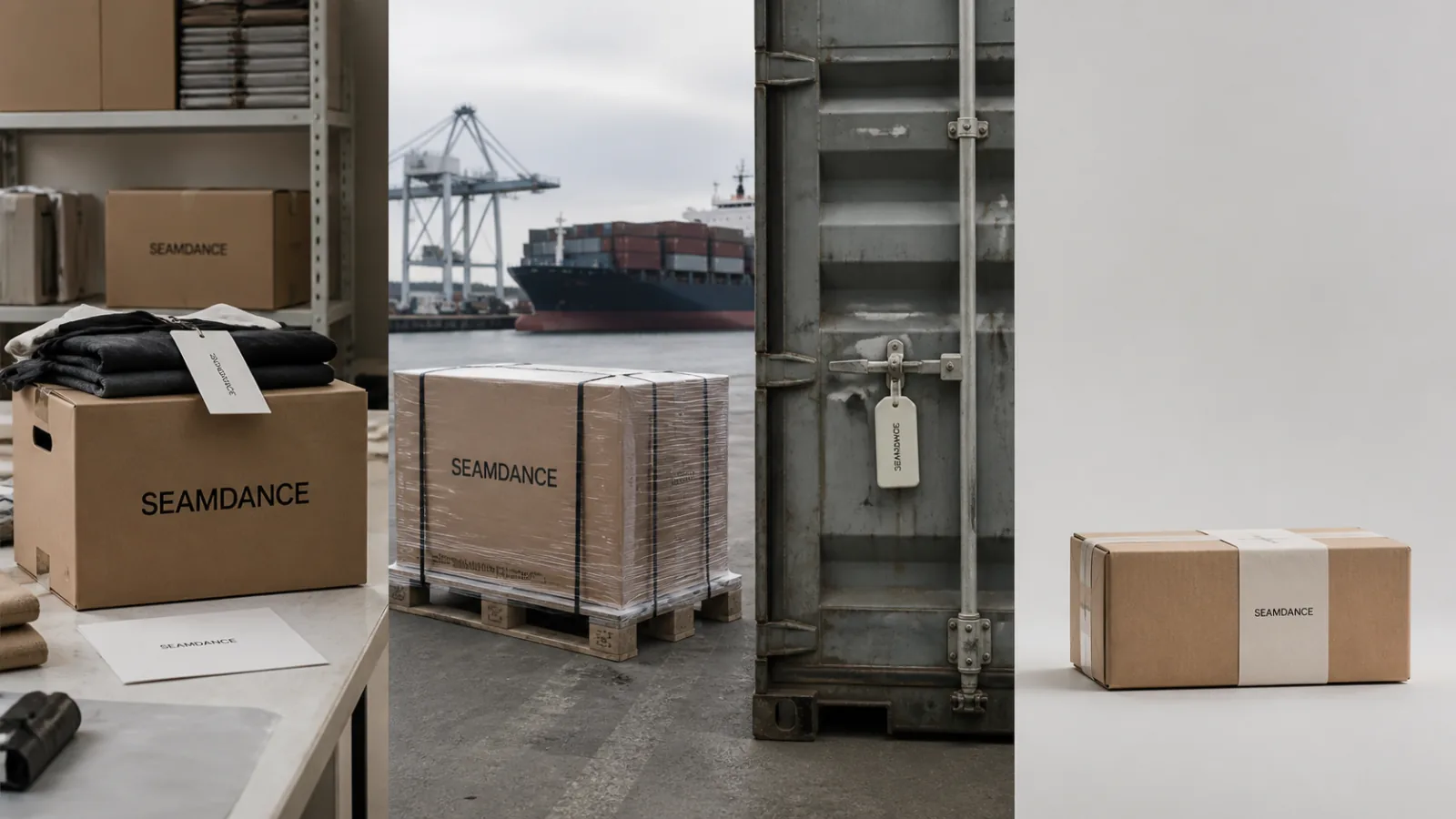
DDP (Delivered Duty Paid) is the only Incoterms® 2020 rule in which your supplier clears the goods through import customs and pays the import duty and taxes; under DAP it delivers to a named place in your country but you clear and pay, and under FOB its job ends once the goods are on board in China [2][4]. The rules do not say whose name goes on the import entry or what value is declared, and in ‘DDP shipping’ offers those two details decide whether a price is safe.
The short answer
- DDP is the only Incoterms 2020 rule in which the seller clears imports and pays import duty and taxes, VAT or GST included; under the other ten, the buyer does [2][3].
- DAP delivers to a named place in your country, but import clearance and duty stay with you [3]; under FOB, a sea and inland waterway rule, risk and freight pass to you once goods are on board [4].
- DDP includes no cargo insurance for the buyer; only CIF and CIP oblige the seller to insure [4].
- ‘DDP shipping’ sold by forwarders is a service, not the Incoterm: get the importer of record and the declared value in writing first.
What do DDP, DAP and FOB mean?
Incoterms are eleven three-letter terms published by the International Chamber of Commerce for sales contracts; as checked on 22 September 2026, ICC presents Incoterms 2020, in force since 1 January 2020, as the latest edition [1]. Each rule fixes where the seller delivers and risk passes, who books the main transport and who clears customs at each end [3]. FAS, FOB, CFR and CIF are for sea and inland waterway only [2].
ICC’s text says FOB does not fit goods handed to a carrier before loading, as at a container terminal, and suggests FCA instead [4]. EXW leaves export clearance in China to you, and ICC recommends FCA where that is hard for the buyer [5]. Under FCA, FOB and CIF the risk is yours from China, even though a CIF seller pays freight and minimum insurance to your port [4].
Seven Incoterms 2020 rules compared
| Rule | Transport | Seller delivers and risk passes | Seller pays up to | Customs split |
|---|---|---|---|---|
| EXW — Ex Works | Any mode | Factory or named place, not loaded | Packing and readiness at the factory | You clear export and import |
| FCA — Free Carrier | Any mode | Handed to your carrier at the named place | Export clearance and handover | Seller: export; you: import |
| FOB — Free On Board | Sea and inland waterway only | On board the vessel at the named port | Export clearance and loading | Seller: export; you: import |
| CIF — Cost, Insurance and Freight | Sea and inland waterway only | On board at the port of shipment | Sea freight and minimum cover to your port | Seller: export; you: import |
| CPT — Carriage Paid To | Any mode | Handed to the carrier the seller booked | Carriage to the named destination | Seller: export; you: import |
| DAP — Delivered at Place | Any mode | Named destination, before unloading | All transport to the destination | Seller: export; you: import, duty and taxes |
| DDP — Delivered Duty Paid | Any mode | Named destination, cleared for import, before unloading | Transport, import clearance, duty and taxes | Seller: export, import, duty and taxes |
Who pays duty, import VAT or GST, and insurance?
ICC’s tariff guidance lists the buyer as clearing imports and paying tariffs under ten of the eleven rules; DDP alone moves both to the seller [2]. Under DDP the seller also pays taxes due on import, VAT or GST included, and you pay from delivery onward, including unloading unless the seller’s freight contract covered it [3].
A DDP seller carries the risk to your door but owes you no insurance cover; only CIF (minimum cover) and CIP (broader cover) require the seller to insure for the buyer [4]. If a DDP quote mentions insurance, ask who can claim.
Which costs sit with whom
| Cost or task | Seller carries it under | Buyer carries it under |
|---|---|---|
| Factory loading and export clearance | Every rule except EXW | EXW |
| Main sea or air freight | CPT, CIP, CFR, CIF, DAP, DPU, DDP | EXW, FCA, FAS, FOB |
| Transit risk | DAP, DPU and DDP, until arrival | All others, from the handover in China |
| Cargo insurance for the buyer | CIF (minimum) and CIP (broader) only | No rule requires it; insure your own risk |
| Unloading at destination | DPU, or where the seller’s freight contract includes it | DAP, DDP and rules that deliver in China |
| Import clearance and brokerage | DDP only | The other ten rules |
| Import duty, including new tariffs | Only DDP | The other ten, DAP included |
| Import VAT or GST | DDP, unless the contract shifts it | The other ten, FOB included |
| Port-to-warehouse delivery | DAP, DPU, DDP; CPT or CIP if the warehouse is named | EXW, FCA, FAS, FOB, CFR, CIF |
Is ‘DDP shipping’ the same as the DDP Incoterm?
Often not. Many forwarders and consolidators in China sell ‘DDP shipping’ as one price covering transport, clearance and duty. That is a service bought from the forwarder, not a term of your sales contract with the supplier [1]; its scope, including whose importer number clears your cartons, is whatever its terms say. ‘Standard’ and ‘express’ DDP are speed tiers; Incoterms 2020 has one DDP rule [3].
‘Door to door’ says where goods end up, not who pays duty: DAP, DPU and DDP all deliver to a named destination, and only DDP adds import clearance and duty [2]. ‘FOB destination’ is US domestic usage rather than an Incoterm, and ICC notes that some US domestic rules give FOB a different meaning [5]. DDU is not among the eleven current rules [4]; ask for it to be restated, usually as DAP.
Is DDP shipping legal and safe?
The DDP rule is lawful: it is one of the ICC terms that UNCITRAL recognises as the international reference for trade terms [1]. The risk lies in how the import is done. In the US, the importer of record answers for the entry’s accuracy and all duties, taxes and fees, even when a broker files it [6]. So ask who the importer is and at what value the goods will be declared.
Some very low all-in rates clear many clients’ cartons under one consolidator’s importer number at values below what was paid. The legal exposure moves to a company you have never dealt with, but your goods stay exposed: US customs may examine any shipment [6], and held cartons are your stock. The name on the entry also decides who customs pursues: in Canada a broker used as importer is jointly responsible with its client for duties and taxes [10], and ICC describes Colombia, where DDP has to run in the buyer’s name under a power of attorney, leaving fines with the buyer [5].
This is general information, not legal or tax advice; check your position with a licensed customs broker in your market.
How does DDP shipping work to the US, Canada, UK, EU and Morocco?
The rule is the same everywhere; what differs is whether a Chinese seller can lawfully import where you are. ICC’s January 2025 survey finds some countries bar foreign firms from import formalities and advises DAP or DPU there [5].
DDP by destination (sources checked 22 September 2026)
| Destination | What the seller must be able to do | Ask before accepting |
|---|---|---|
| United States | Be importer of record, answerable for the entry and all duties, taxes and fees [6]; a company incorporated abroad also needs a resident agent to accept legal service and a bond from a resident corporate surety [7] | Whose importer number and bond, and will I get a copy of the entry? |
| Canada | Get a Canada Revenue Agency business number, register in CBSA’s CARM portal as a non-resident importer, and pay duties and taxes as importer of record [10] | Whose business number is on the declaration? |
| United Kingdom | Clear import and pay duty, per HMRC’s summary of DDP [8]; ICC says UK importers normally need VAT and customs registration, harder for non-UK firms [5] | Whose EORI is used, and who gets the import VAT evidence? |
| European Union | Declare through a party normally established in the EU [9]; in Denmark, ICC reports, a DDP seller needs VAT registration or a VAT representative to reclaim import VAT [5] | Which EU party declares, and in whose name? |
| Morocco | ICC reports that declarations need a Moroccan trade register number and judges DDP impractical for imports [5] | Agree DAP or FCA and let your Moroccan agent clear |
What should a DDP quote show, and does DDP cost more?
There is no standard DDP price: it depends on mode, route, volume, each style’s classification and customs value, the destination’s duty and tax rules, and the seller’s allowance for duty changing before entry, a risk DDP puts on it [2]. The Incoterm does not change customs valuation: HMRC says DDP goods can still be valued on the transaction-value method [8].
A correctly declared DDP price should roughly equal DAP plus duty, taxes and a fee for clearing and funding them; ask for both quotes with those lines separate, and question any DDP figure below that sum, starting with the declared value. A usable quote names the rule, place and edition; the importer of record; each style’s HS code and declared value; duty, taxes, brokerage and delivery as separate lines; exclusions such as unloading, storage, examination and insurance; and the effect of a duty change before entry.
Which rule suits an apparel brand?
Check this against your own forwarder and customs broker.
When each rule suits an apparel brand
| Rule | Suits a brand that | Watch for |
|---|---|---|
| EXW | Has a forwarder in China that collects from the factory and clears export | ICC recommends FCA where export clearance is hard for the buyer [5] |
| FCA | Books its own freight, containers included, and wants the supplier to clear export | Name the handover point precisely; risk passes there |
| FOB | Books its own sea freight, with cartons loaded directly on board | Use FCA if goods are handed over at a terminal first [4] |
| CIF | Wants the supplier to book sea freight to its port | Risk is yours from loading, and the required cover is limited [4] |
| DAP | Wants door delivery but imports in its own name | You still need a broker and funds for duty and taxes |
| DDP | Is testing a small order without import registration, buying from a seller with a lawful importer in its market | Get the importer of record and declared value in writing |
What to put in writing
Write the rule, named place and edition into the purchase order, for example ‘FCA (forwarder’s warehouse address), Xiamen, Incoterms 2020’; risk passes at the named point [3]. For DDP, add the importer of record, declaration at the invoiced value, copies of the entry and of duty and tax paid, and the exclusions from the quote. For a variant such as ‘DDP, VAT unpaid’, state who pays each tax.
SEAMDANCE proposes an HS code for each style when it quotes, so your broker can check the duty line before you choose a term. If you are VAT- or GST-registered, read our guide to DDP quotes and the import VAT you cannot reclaim before accepting a delivered price: the name on the entry decides which import records you receive.
Quick answers
What does DDP shipping mean?
DDP means Delivered Duty Paid, one of ICC’s Incoterms 2020 rules: the seller delivers to a named place in your country, cleared for import with duty and taxes paid, and carries the risk until arrival [3]. Forwarders also sell ‘DDP shipping’ as a delivered freight service, so check whether you are agreeing the Incoterm or buying a service.
How does DDP shipping work in practice?
The seller, or its forwarder, books transport from China, clears export, and has a party in your country clear import and pay duty and taxes before delivering to your address [3]; you unload. The step to check is the import: that party must be entitled to act as importer of record in your market, and it answers for the entry [6].
Does DDP include tariffs and customs clearance?
Under the Incoterm, yes. DDP is the only rule in which the seller handles import clearance and pays import duties, tariffs included [2]. ICC treats tariff changes as part of that allocation, so a rise that applies at entry falls on the seller unless your contract says otherwise [2]. A forwarder’s ‘DDP’ service may exclude new duties in its terms; read them.
Does DDP include import VAT or GST?
Under the Incoterm, yes: taxes payable on import, including VAT or GST, are the seller’s cost along with duty [3]. Parties sometimes agree instead that the buyer pays import VAT, a practice ICC records for Denmark [5]. Either way, a VAT- or GST-registered brand should confirm whose name is on the entry before assuming it can reclaim the tax.
Does DDP include insurance?
No. ICC’s DDP text gives the seller no obligation to insure the goods for the buyer [3]. The seller carries transit risk until delivery and may insure its own exposure, but you have no claim unless the contract provides one. Only CIF and CIP oblige the seller to insure for the buyer: minimum cover (Institute Cargo Clauses C) under CIF, broader (Clauses A) under CIP [4].
Is DDP shipping legal, or can it be illegal?
The DDP rule is a lawful, standard contract term [1]. An offer becomes a problem when the import is done wrongly: goods declared below their real value, or cleared by a party not entitled to import in your market. The importer of record answers for the entry [6], but your goods are the ones held if the declaration fails. Ask who imports and at what value.
Is DDP more expensive, and is it worth it?
Incoterms do not set tariff rates [2], so a correctly declared DDP price should equal a DAP price plus the duty and tax due plus the seller’s fee for handling them. Compare both quotes with those lines separate. DDP suits small first orders and brands without import registration; it is poor value if you cannot reclaim VAT or GST paid under someone else’s entry.
What is the difference between DDP and DAP?
Both deliver to a named place in your country, leave unloading to you and keep transit risk with the seller until arrival [3]. The difference is the import: under DAP you clear customs and pay duty and import taxes; under DDP the seller does [2]. ICC points sellers that cannot clear imports in the buyer’s country to DAP or DPU instead [3].
Should I buy FOB or DDP from a Chinese supplier?
FOB gives you control: the supplier clears export and loads the vessel at the named port, and your forwarder handles freight, import and duty [4]. DDP hands all of that, including the import entry, to the supplier. FOB, or FCA for terminal handovers, suits brands with their own forwarder and broker; DAP sits between, delivering to your door while you keep the import.
Is DDP the same as door-to-door shipping?
Not quite. ‘Door to door’ describes where goods end up, not who clears customs or pays duty. DAP, DPU and DDP can all name your warehouse as the destination, but only DDP adds import clearance and duty [2]. When a forwarder offers door-to-door delivery, ask which of these it is and whose name will be on the import entry.
Sources
- ICC — Incoterms® rules (eleven trade terms for contracts of sale; Incoterms 2020 in force since 1 January 2020 and presented as the most recent edition; recognised by UNCITRAL)
- ICC — Using the Incoterms® 2020 rules to manage tariff risk in international trade, April 2025 guidance note downloadable from this page (who clears export and import and who pays tariffs under each rule; which rules are sea and inland waterway only)
- ICC Digital Library — Incoterms® 2020, rules for any mode or modes of transport (DDP and DAP text: delivery point, import clearance, duties and taxes, unloading, no insurance obligation)
- ICC Digital Library — Incoterms® 2020, rules for sea and inland waterway transport with article-by-article text (FOB and container terminals; insurance obligation only under CIF and CIP)
- ICC — National regulatory barriers to the Incoterms® 2020 rules, January 2025 (DDP limits reported for Morocco, the UK, Denmark and Colombia; EXW and FCA guidance; US domestic use of FOB)
- U.S. Customs and Border Protection — Tips for new importers and exporters (importer of record responsible for the entry and all duties, taxes and fees; CBP may examine any shipment)
- U.S. Government Publishing Office — 19 CFR 141.18, Entry by nonresident corporation, April 2025 edition (resident agent for service of process and bond with a resident corporate surety)
- GOV.UK (HMRC) — Customs valuation: Incoterms (DDP seller clears import and pays duty; the Incoterm does not restrict the valuation method)
- European Commission, Taxation and Customs Union — Customs declaration (who lodges import declarations; as a rule established in the EU)
- Canada Border Services Agency — Guide to importing commercial goods: set up your business to import (non-resident importers need a CRA business number and CARM registration; importer of record pays duties and taxes)
Why a delivered price can leave a VAT- or GST-registered brand without the import records it needs to reclaim tax.
Open the programSourcing styles for your line? The 2026 catalogue lists every ready-to-develop style — colorways, materials, quote list built in.